
Mastering the
APDOE HatchPro 12
Everything you need to know about setting up and succeeding with your APDOE professional egg incubator.
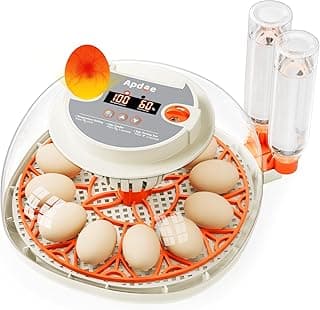
APDOE HatchPro 12 Egg Incubator with Temperature and Humidity Control, Automatic Egg Turner, Egg Candler, External Water Bottle Refill, Air Vent, 360° Clear View, Hatching Chicken Duck Quail Birs
The APDOE HatchPro 12 is a professional-grade incubator designed for hobbyists and serious breeders alike, featuring precise environmental controls and automatic systems.
Guide Contents
Why Choose the HatchPro 12?
Choosing the right incubator is the most critical decision in your hatching journey. The APDOE HatchPro 12 stands out in the crowded market for its **360° clear view**, allowing you to monitor development without ever lifting the lid.
Automated Success
Automatic egg turning and temperature control reduce human error significantly.
Unmatched Visibility
The 360-degree transparent cover provides a front-row seat to the miracle of life.
Key Features & Capabilities
Precision Temperature Control
The HatchPro 12 utilizes an advanced induction heating system that maintains consistency within 0.1°F, crucial for delicate embryos like quail or parrot eggs.
Automatic Egg Turner
Say goodbye to manual turning. The built-in motor rotates eggs every 2 hours, preventing the embryo from sticking to the shell membrane.
External Water Refill
One of the best design choices is the external replenishment system. You can maintain humidity without opening the incubator, preventing sudden temperature drops.
Quick Setup & Operation
Power Up
Connect the power cable and let the incubator stabilize for 2-4 hours before adding eggs.
Test the Turner
Press and hold the 'Plus' (+) button for 3 seconds to test the automatic turning mechanism.
Set Humidity
Fill the external water bottle and connect it to the base. For the first 18 days, aim for 45-55% humidity.
Candling Check
Use the built-in LED candler by pressing the 'Light' button to verify egg fertility on day 7.
Success Tips for Hatching
Frequently Asked Questions
What day do you stop turning eggs in the incubator?
You should stop turning eggs in the incubator typically on day 18 for chicken eggs. This is known as 'lockdown.' At this point, the chicks are positioning themselves for hatching, and turning could disrupt the process. The eggs are no longer turned for the final three days of incubation to allow the chick to get into the proper hatching position.
Why do incubators turn eggs?
Incubators turn eggs to mimic the natural behavior of a broody hen. Turning prevents the developing embryo from sticking to the shell membranes, ensures even heat distribution, and promotes healthy development of the circulatory system and overall growth. Without regular turning, the chances of a successful hatch are significantly reduced.
Can you incubate eggs without turning them?
Yes, it is physically possible to incubate eggs without turning them, but the hatch rate will be very low and the risk of deformities is high. The embryo is likely to stick to the shell, leading to developmental issues and death. For a successful hatch, regular turning is essential until the final few days of incubation.
How to spot a bad egg in the incubator?
You can spot a bad egg by candling it around day 7-10 of incubation. A fertile, developing egg will show visible veins and a dark spot (the embryo). A bad or infertile egg will appear clear or show a stationary, dark, blood-ringed mass, which indicates a dead embryo. Bad eggs may also develop a foul, sulfur-like smell and should be removed from the incubator immediately to prevent contamination.
Can I stop turning eggs on day 14?
Stopping on day 14 is too early for most common poultry like chickens, which have a 21-day incubation period. For chicken eggs, turning should continue until day 18. Stopping on day 14 can lead to the embryo sticking to the shell and failing to develop properly. Always follow the specific guidelines for the type of bird you are hatching.
What temperature should an incubator be in the last 3 days?
During the last 3 days (the lockdown period), the incubator temperature should remain stable at the standard incubation temperature, which is typically 99.5°F (37.5°C) for forced-air incubators. The key change in the final days is an increase in humidity, not a decrease in temperature.
Is 80% humidity too high for hatching eggs?
For most of the incubation period, 80% humidity is too high and can prevent the egg from losing enough moisture, leading to a large, weak chick that may drown or fail to pip. However, during the final 3 days (lockdown), humidity should be increased to around 65-80% for chicken eggs to prevent the inner membrane from drying out and trapping the chick. Always check specific requirements for your bird species.
Should you spray eggs in an incubator?
Generally, no, you should not spray eggs in an incubator. Spraying can cool the eggs rapidly and introduce bacteria through the porous shell, potentially causing infection. The correct way to manage humidity is by adjusting the water channels or vents in the incubator. Some waterfowl breeders use a light misting with warm water for specific reasons, but it is not recommended for beginners or for chicken eggs.
What are the reasons for egg turning?
The primary reasons for turning eggs are: 1) To prevent the embryo from sticking to the shell membranes, which is fatal. 2) To ensure even heat distribution around the egg. 3) To stimulate embryonic development and promote the proper formation of the circulatory system and organs. 4) To exercise the embryo and encourage normal, healthy growth.
When to open vents on incubator for eggs?
Incubator vents should be adjusted based on the incubation stage. Initially, vents can be partially closed to maintain stable temperature and humidity. As incubation progresses, especially after the first week, vents should be gradually opened to increase fresh air exchange and remove carbon dioxide as the embryo's oxygen demand grows. By the final lockdown stage, vents are often fully open to provide maximum oxygen for the hatching chicks.
Can you eat eggs right after they are laid?
Yes, you can eat eggs right after they are laid. They are perfectly safe and fresh. In fact, many people believe farm-fresh eggs have a superior taste and texture. There is no need to wash them until you are ready to use them, as they have a natural protective coating called the 'bloom' that helps preserve them.
Can you turn eggs too much during incubation?
No, turning eggs too much is generally not a problem as long as it is done gently and the eggs are not subjected to extreme temperature changes. Most automatic turners rotate the eggs very slowly and frequently. The greater risk is not turning them enough. The key is consistent, regular turning rather than the total number of turns. As long as the turning is smooth and doesn't jar the eggs, you are unlikely to over-turn them.
Ready to Start Your Hatching Journey?
The APDOE HatchPro 12 is currently one of the most reliable and beginner-friendly incubators on the market.